

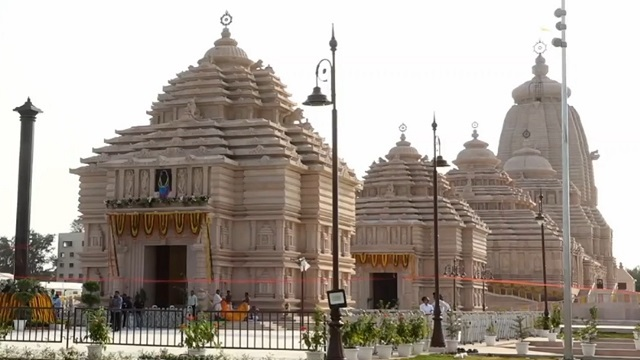
The Digha Jagannath Temple, officially known as Digha Jagannath Dham, is a newly inaugurated Hindu temple located in the coastal town of Digha, Purba Medinipur district, West Bengal, India. This magnificent spiritual landmark was opened to devotees on April 30, 2025, marking a significant religious and architectural milestone in eastern India.
Historical Background and Construction
Planning and Announcement
West Bengal Chief Minister Mamata Banerjee announced the construction of the temple on December 20, 2018, with the vision of creating a grand spiritual complex that would rival the famous Jagannath Temple in Puri, Odisha. The project aimed to attract devotees and tourists while promoting Digha as a spiritual destination.
Construction Timeline
The detailed project report was completed by August 2019, and construction commenced on May 10, 2022, during the auspicious occasion of Akshaya Tritiya. The West Bengal Housing Infrastructure Development Corporation (HIDCO) oversaw the construction, which took nearly three years to complete. The temple was officially inaugurated with a Prana Pratistha (consecration) ceremony on April 30, 2025, aligning with Akshaya Tritiya, considered highly auspicious in the Hindu calendar.
Construction Cost and Timeline
The temple complex was constructed at an estimated cost of approximately ₹250 crore (around $30 million USD). Over 3,000 workers and more than 800 skilled artisans, many from Rajasthan, dedicated their efforts to create this architectural marvel over 36 months.
Architectural Features
Kalinga Style Design
The temple is designed following the traditional Kalinga architectural style, directly inspired by the 12th-century Jagannath Temple in Puri. This ancient architectural tradition is characterised by precise proportions, intricate carvings, and spiritual symbolism rooted in Hindu temple design principles.
Structural Specifications
The temple stands at an impressive height of 65 meters (213 feet), making it one of the tallest religious structures in the region. It is constructed using over 300,000 cubic feet of Bansi Paharpur pink sandstone sourced from Rajasthan, chosen for its durability and distinctive warm, glowing aesthetic. The flooring throughout the complex features imported Vietnamese marble, adding elegance and resilience.
Temple Complex Components
The sprawling 24-acre complex includes four principal structures typical of classical Kalinga temple architecture:
- Vimana (Garbha Griha): The sanctum sanctorum housing the primary deities
- Jagamohan: The assembly hall
- Nat Mandir: The dance hall
- Bhog Mandap: The offering hall
Distinctive Architectural Elements
The temple features four grand gateways, each with symbolic significance:
- Singhadwara (lion gate)
- Byaghradwara (tiger gate)
- Hastidwara (elephant gate)
- Ashwadwara (horse gate)
The main entrance, Chaitanyadwar, leads into the central axis. Additional architectural features include elaborate carvings depicting mythological stories, the sacred Ratnabedi (jeweled platform) where the deities rest, and a Sudarsana Chakra that creates an optical illusion by appearing identical from every angle. Like the Puri temple, the flag atop the temple reportedly flies against the wind.
Deities and Religious Significance
Primary Deities
The temple enshrines three principal deities of the Vaishnava tradition:
- Lord Jagannath (a form of Lord Vishnu)
- Lord Balabhadra (Lord Jagannath’s brother)
- Goddess Subhadra (Lord Jagannath’s sister)
Idol Materials
Unlike the Puri temple where deities are carved from sacred neem wood (known as Darubrahma) and replaced every 12–19 years through the Nabakalebara ritual, the Digha temple’s main idols are carved from stone. This represents a notable departure from Puri tradition, reflecting the temple’s unique identity while maintaining spiritual significance.
A separate set of wooden idols carved from ordinary neem wood by renowned Bhubaneswar-based sculptor Sudarshan Maharana are ceremonially paraded during the annual Rath Yatra.
Additional Shrine
The complex includes a dedicated shrine for Goddess Lakshmi, along with a separate Bhogshala (kitchen) for preparing sacred offerings.
Visitor Information
Location and Accessibility
Address: New Digha, Purba Medinipur District, West Bengal
Nearest Railway Station: Digha Railway Station (approximately 2-3 km away), well-connected to Howrah and Sealdah with regular services
Nearest Airport: Netaji Subhas Chandra Bose International Airport, Kolkata (approximately 190-191 km away)
Temple Timings
- Morning Darshan: 6:00 AM to 12:30 PM (Some sources indicate 5:30 AM start)
- Evening Darshan: 4:00 PM to 9:00 PM (Some sources indicate 3:30 PM start)
- Closure: The temple closes during midday (12:30 PM to 4:00 PM) for rituals and maintenance
Entry and Facilities
The temple welcomes visitors of all faiths and backgrounds, including international visitors, with no entry fee required. Entry gates are accessible via Gates 6 and 7. The complex features modern amenities, including rest areas and accessibility features, while maintaining traditional proportions and spiritual design.
Daily Rituals and Aarti
Morning Aarti: Approximately 6:30 AM
Evening Aarti: Approximately 6:30 PM
Daily worship includes traditional rituals performed with devotion, bhajans (devotional songs), spiritual discourses, and regular prayers. The temple resonates with continuous devotional activities throughout the day.
Annual Festivals and Important Dates
Rath Yatra 2025
The temple’s inaugural Rath Yatra was scheduled for June 27, 2025, coinciding with the same date as the original Puri Rath Yatra. The procession covered approximately 1 kilometre (significantly shorter than Puri’s 3-kilometre route) and was expected to attract thousands of devotees. West Bengal Chief Minister Mamata Banerjee was scheduled to attend the celebration.
Snana Yatra (Ritual Bath Ceremony)
This important ceremony occurred on June 11, 2025. Following Puri’s tradition, the deities underwent a purification bath using water from 108 vessels.
Anavasara Period (Temple Closure)
From June 12-25, 2025, the temple remained closed for darshan (viewing). During this period, it is believed that Lord Jagannath becomes ill after the ritual bath and requires isolation and recovery. The deities are kept away from public view for approximately 15 days, similar to Puri tradition. During Anavasara, devotees can visit a nearby shrine dedicated to Madan Mohan for alternative darshan. The temple reopened on June 26, 2025, one day before Rath Yatra.
Other Important Festivals
Following Puri traditions, the temple celebrates:
- Nrusingha Jayanti (May 11)
- Chandana Yatra and Chandana Purnima (May 12)
- Netrotsab (June 26)
- Hera Panchami (July 1)
- Bahuda Yatra (July 5)
- Suna Besh (July 6)
- Adhara Pana (July 7)
- Niladri Bije (July 8)
Controversy and Naming Dispute
The use of the term “Jagannath Dham” for the Digha temple sparked significant controversy and religious debate. According to traditional Hindu scriptures and the teachings of Adi Shankaracharya, the title “Dham” (sacred abode) is specifically reserved for four primary pilgrimage sites: Puri (Jagannath Dham), Badrinath, Dwarka, and Rameswaram.
Objections from Odisha
Renowned sand artist and Padma Shri awardee Sudarsan Pattnaik expressed concern that the naming would mislead devotees and disrespect the unique identity of the Puri shrine. He stated that “according to our sacred scripture, there exists only one Jagannath Dham, which is located in Puri.”
Religious and Political Responses
- The chief priest of the Puri temple’s inauguration requested the removal of the “Dham” label from Digha
- Puri King Gajapati Maharaja Dibyasingha Deb objected to the term’s use, emphasising that Purushottam Khetra (Puri) is the exclusive abode of Lord Jagannath
- The Puri Mukti Mandap Pundit Sabha supported these sentiments
- Promotional materials featuring imagery similar to the exclusive ‘Neelachakra’ symbol of Puri also drew criticism
However, despite the controversy, the temple has become increasingly popular with devotees and tourists, transcending the naming debate.
Visitor Experience and Popularity
Within just five days of opening, the temple attracted over 10 lakh (1 million) devotees. On a single remarkable Sunday, over 50,000 visitors were recorded in one day—the highest single-day count since the inauguration. By June, the temple had witnessed a footfall of more than 40 lakh (4 million) visitors. The enormous crowds prompted coordinated efforts between police and temple authorities to manage visitors efficiently, with loudspeakers guiding devotees to prevent crowding at the sanctum sanctorum.
Visit: LifeBio.in
Special Offerings
Unlike Puri, which is famous for “khaja” (a traditional sweet), Digha’s temple offers sandesh (a Bengali sweet) and gaja (another traditional dessert), which have become popular among devotees.
Best Time to Visit
The ideal visiting season is October to February, when weather conditions are cool, dry, and pleasant, with temperatures ranging between 15°C and 25°C. This period is perfect for spiritual visits and beach activities.
Avoid: The monsoon season (June to September) due to heavy rains, and summer months (March to May) when heat and humidity can be uncomfortable, though early mornings and evenings remain manageable.
Nearby Attractions
Digha offers diverse attractions combining spirituality and recreation.
Beaches
- Old Digha Beach (2 km away): Classic charm with golden sand and local handicraft stalls
- New Digha Beach (2 km away): Modern facilities with promenades, water sports, and restaurants
- Talsari Beach and Lal Kakra Beach: Offbeat alternatives
Parks and Recreation
- Amaravati Park: Boat rides, rope way, gardens (7:30 AM – 7:30 PM; Entry: ₹5)
- Wonderland Kajal Dighi: Amusement park with toy trains and boat rides
- Digha Science Centre: Interactive science experiments and shows
Marine Life
- Marine Aquarium and Regional Centre (MARC): India’s largest marine research centre with rare sea creatures (9:00 AM – 6:00 PM; Entry: ₹10; Closed Mondays)
Other Destinations
- Mandarmani (coastal resort area)
- Snake Temple and local Vishnu temples
- Mohona (river mouth)
- Kaju Garden and local market areas
Project Significance
The Digha Jagannath Temple represents a significant milestone in West Bengal’s cultural and spiritual landscape. It serves as:
- A spiritual destination comparable to Odisha’s Puri Jagannath Temple
- An educational and cultural hub hosting spiritual discourses and Vedic teachings
- A tourist attraction that combines religious pilgrimage with recreational activities
- An economic development initiative for the local Digha region
- A symbol of inclusive spirituality, welcoming devotees of all faiths and backgrounds
Partnership and Management
The temple was developed as a joint initiative by the Government of West Bengal and ISKCON (International Society for Krishna Consciousness), ensuring both governmental support and spiritual guidance in its operations and religious practices.
Must Read: Travelling from Kolkata to Digha: Examining Every Possibility